A heartfelt and nostalgic reflection on growing up in the small village of Orfordville, Wisconsin, filled with friendship, freedom, first loves, and the unforgettable hum of a red 1964 Rambler along winding country roads.
Growing up in Orfordville, a quaint village in Rock County, Wisconsin, with a population of less than 900 when I left in 1974, shaped me in ways that still echo through my life. That little town, where everything revolved around school, church, and community, was more than just a dot on the map—it was home, and a place where we all felt safe. Everyone knew each other. We were neighbors, classmates, extended family in the best sense of the word.
You couldn’t walk into Dickinson’s grocery store without running into someone you knew. A trip to the Cozy Corner for a Pepsi with friends wasn’t just about the soda—it was about the laughs, the gossip, the comfort of familiar faces. Childhood was filled with games like kickball and Red Rover, and afternoons of hopscotch drawn with broken chalk on sun-warmed sidewalks. Behind our houses, the woods were our playground. We built forts out of sticks and dreams, picked wild blackberries with scratched-up arms and berry-stained lips, always hoping Mom might turn them into pie or jam.
Summer carried the sweet scent of cornfields and the steady hum of bikes riding to Footville on the “old back road.” We’d stop for a picnic by the “spring,” where time felt like it stood still. On those unbearably hot days, we’d beg our parents to take us to the Brodhead Community Pool or cool off with a frosty mug of root beer from the A&W.
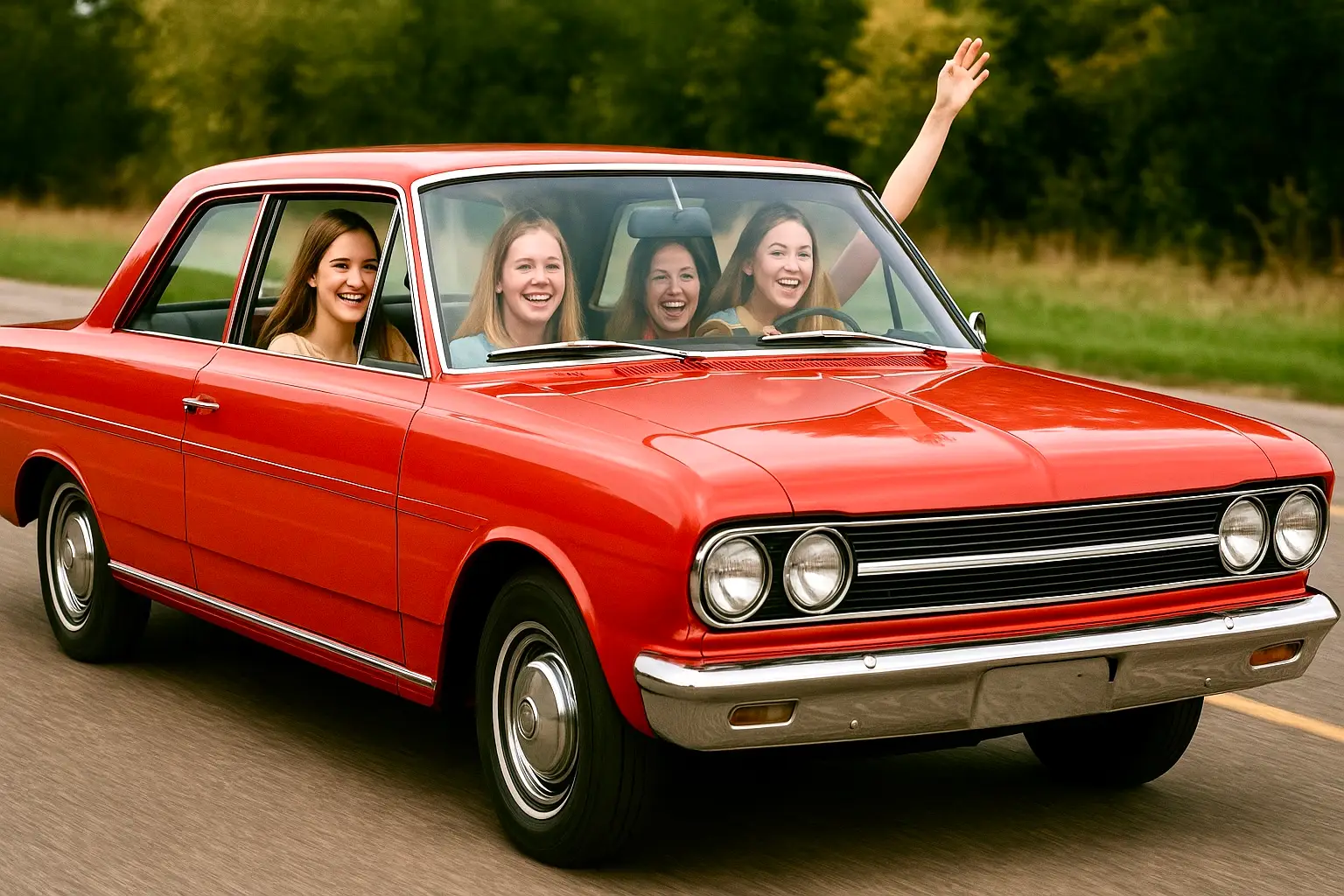
My friends and I spent hours driving the rural roads surrounding Orfordville in my 1964 Rambler—a red hardtop with personality and plenty of quirks. It was my first car, my freedom. We’d roll the windows down, turn the radio up, and let the wind whip through our hair as we sang along to the Monkees or Diana Ross. We knew every curve in the road, every field that signaled we were almost home. And we never ran out of things to talk about or laugh over.
Winter transformed our world. Snowdrifts as tall as we were turned yards into kingdoms, and the community skating rink was our icy stage. Those cold nights somehow felt warm—bundled up, cheeks red from the chill, hearts full from the company
There were big moments, too—little milestones that seemed enormous at the time. My first kiss, shy and sweet. The thrill of hosting my first mixed-gender party in seventh grade. Putting on pantyhose for the first time before a Christmas program, feeling so grown up. Sneaking out during sleepovers, hearts pounding with the thrill of rebellion. These moments stitched themselves into my memory, all playing to a soundtrack of our time—“Daydream Believer,” spinning on repeat.
Everyone came from different walks of life—some kids grew up milking cows before school, others had parents who worked at the GM Plant in Janesville or ran the local diner. My dad worked as an inspector for Associated Milk Producers, and my mom was the “lunch lady” at school. They showed me the meaning of hard work, perseverance, and pride in what you do.
At 16, I started waitressing. That red Rambler came shortly after—my ticket to independence. It wasn’t much, but it was mine. That car saw everything—from quiet conversations under the stars to raucous laughter as we headed to Janesville to cruise the circuit. It held our secrets, our dreams, and so many of our best memories.
Of course, small-town life had its downsides. News traveled faster than we could. An innocent meetup in Mr. Ballmer’s field somehow beat me home, and my parents already knew before I stepped through the door. But even then, there was something oddly comforting about being so known.
Events like Junior Prom or the Senior Homecoming bonfire weren’t just school functions—they were community events, filled with pride and tradition. Serving as Student Council President was a big moment for me, especially the victory of getting a soda machine installed in the lunchroom. But it was our impromptu graduation party—with a stolen roasted pig—that truly went down in Orfordville legend.
There were 110 of us in our graduating class, and most of us had grown up together. Some friendships started in kindergarten, others in junior high, but they all stuck. Those relationships became the foundation of who I am. When tragedy struck a family, we all felt it. And when my mother got sick, the town showed up—for meals, for comfort, for love. That’s what Orfordville did. It took care of its own.
I used to complain about how small it all felt—how everyone knew everything and how there was never anything to do. I’d slip up and call soda “pop,” and people would laugh. But once I left, I realized just how rare and precious that life was. Cities might offer more, but they can’t replace the feeling of being deeply known, of being rooted in something real.
Even now, after years away, there are nights when I long to sit on my parents’ porch and watch the stars, or cruise those quiet country roads with Mary riding shotgun, the radio humming some forgotten tune from our youth. Orfordville gave me more than a childhood. It gave me a compass. It gave me my roots, and for that, I’ll always be grateful.