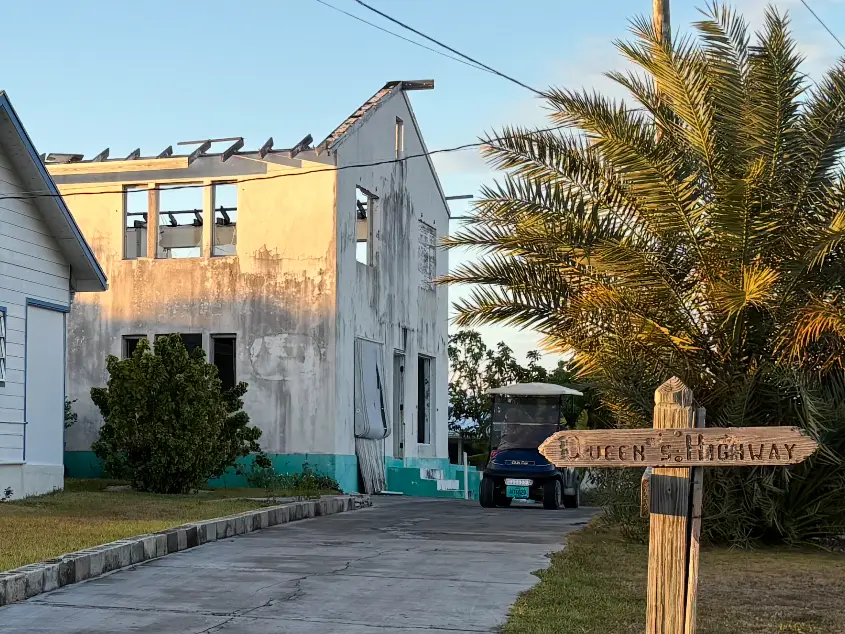
For decades, I believed Man-O-War Cay was immune to the harshness of the world—a little island of peace and purity surrounded by aqua waters and filled with good people. But after Hurricane Dorian, and now returning to witness the aftermath with my own eyes, I’ve come to understand the heartbreak, the trauma, and the unimaginable resilience of the people who call this place home.
What amazes me most isn’t what I’ve heard from my friends on Man-O-War Cay—it’s what I haven’t heard.
I haven’t heard whining. I haven’t heard bitterness. I haven’t heard anyone asking for pity or going on about how unfair it all was—even though, God knows, they’d have every right to. The only thing that really seems to matter to them is that there was no loss of life here.
No one here plays the victim. They don’t moan about what they lost, even though some lost everything. They talk about the storm with quiet honesty, sometimes even with grace. But they don’t wallow in it. They’ve endured more than I can truly comprehend, and yet they carry themselves with a kind of calm dignity that moves me to my core.
Man-O-War Cay has always felt like a sacred place to me—my paradise place. Nestled in the clear blue waters of the Bahamas, it’s been my escape from the noise and chaos of the world. A place that felt safe. Gentle. Untouched by the ugliness that seems to creep in everywhere else.
Years ago, I called it “paradise” in a conversation. Karen gently corrected me. “To you, it’s paradise,” she said. “To us, it’s simply home.”
And maybe that’s what makes it so special.
But when Hurricane Dorian hit in 2019, that illusion of untouchability shattered. I followed the coverage obsessively from afar—every photo, every video, every bit of news I could find. I remember crying, feeling helpless, desperate to understand the scope of the devastation.
And now, nearly six years later, I’m here. I’ve come back. And what I see with my own eyes is even harder to take in than anything I saw on a screen.
The island is still here. But so are the scars.
They’re in the spaces where houses used to stand. They’re in the sound of the wind brushing across an empty lot where children once played. But more than anything, they’re in the faces of the people. The same people I’ve loved for decades. The people who welcomed me like family every time I came ashore.
Their eyes tell the story now.
They’ve told me what it was like—those terrifying hours when the wind roared like a freight train and the sea swallowed everything in its path. I’ve heard about how they sat in their living rooms, clutching umbrellas to shield themselves from the rain pouring in through roofs that no longer existed. One friend told me, “We sat in water up to our ankles and didn’t know what would happen next.”
They watched everything they owned—furniture, clothes, keepsakes—wash away. I’ve heard over and over again, “We never found it. It was just gone.” Jennie told me it was several days before she found out where her couch ended up. Her couch! That was the scale of the destruction. Entire pieces of people’s lives—vanished.
And then after several days of pounding rain, came the silence.
No power. No running water. No way to communicate. Some people went a full year—without electricity. They lived off generators when they could afford the fuel. Agnes explained how she rinsed clothes with collected rainwater, strung salt-stained shirts across broken fences, and did the best she could to salvage what was left.
They told me about the helicopters that flew sick and injured people out, and the volunteers who came by boat, bringing food, water, tools, and hope. I learned about how Penny was airlifted off the island and no one knew at the time knew where she had need taken. And still… they stayed.
They stayed because this isn’t just an island. It’s their home. And they rebuilt—not just the houses, but the soul of the community. They put the pieces back together day by day, brick by brick, tear by tear. They helped one another before helping themselves.
And through it all, I can’t stop asking the question that has haunted me since the day the storm made landfall: Why here? Why them?
These are the kindest people I’ve ever known. Their lives are built around community, faith, and family. They don’t chase wealth or fame. They live simply and give generously. Why did this have to happen to them? Why this peaceful place, this quiet corner of the world where life was once so gentle?
I’ve spent most of my life trying to understand the world—trying to make sense of the unexplainable. But this… this makes no sense at all.
There’s now a clear line in time here—“before Dorian” and “after Dorian.” The storm didn’t just take buildings; it stole a sense of safety. It changed how people see the sky. And yet, in spite of it all, Man-O-War remains.
Stronger. Wiser. Changed—but unbroken.
To my friends who stayed, who endured, who fought, and who continue to rebuild: You are the soul of this island. You’ve shown the world what it means to be resilient. You’ve taught me that paradise isn’t about being untouched by pain. It’s about love that holds firm in the middle of the storm.
Man-O-War Cay may never be the same again—but your strength and spirit make it even more beautiful than before.